Affiliate disclosure: As an Amazon Associate I earn from qualifying purchases. If you buy through links in this guide, we may earn a commission at no extra cost to you.
A DIY wine advent calendar lets you choose a holiday countdown around someone's taste instead of accepting a fixed assortment. It can contain a few bottles, useful wine accessories, tasting prompts, and plans to spend time together. You do not need 24 bottles or a daily drinking schedule to make the calendar feel special.
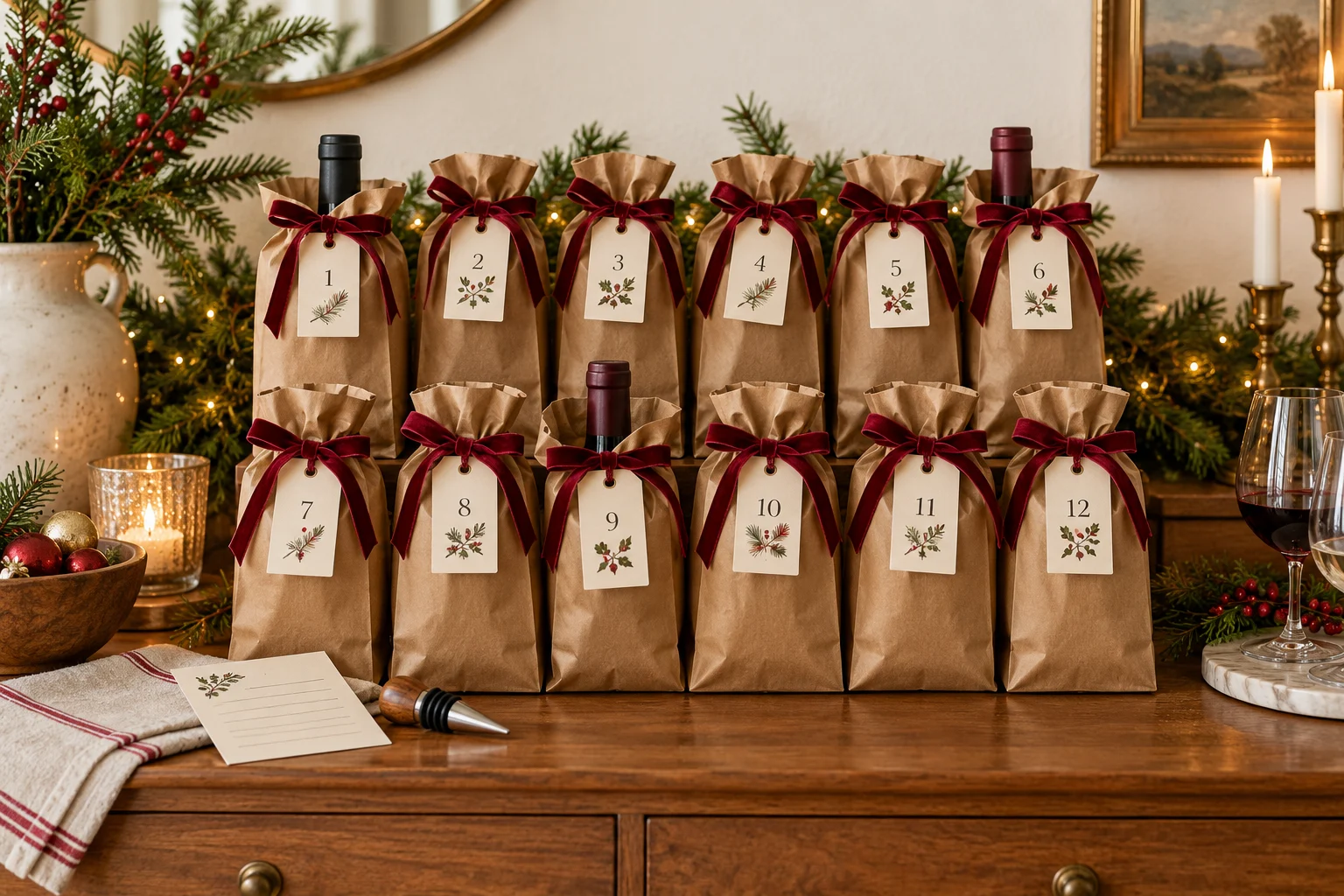
This tutorial creates a 12-surprise gift calendar for Christmas 2026. Use it on twelve dates you choose, or open one package per day leading up to Christmas. The suggested Amazon purchases are accessories and books, not a ready-filled wine calendar. Buy any wine separately from a suitable retailer.
These are editorial selections based on product listings and gift suitability, not hands-on test results. Check the current listing for price, availability, dimensions, seller, and included accessories before ordering.
Choose your wine advent calendar style
Start with the person. A curious beginner might enjoy a book and tasting cards. A regular host may appreciate an opener or a small serving accessory. Someone who already owns plenty of equipment may prefer a calendar of shared experiences with just one bottle at the end.
A 12-day advent calendar is easier to assemble and store than a 24-day version. If you want 24 surprises, expand the prompts and activities rather than doubling every purchase. The calendar can be a fun way to explore wine without becoming a lot of wine to finish during a busy holiday season.
Materials for a DIY advent calendar
- 12 sturdy gift bags, small boxes, or reusable fabric pouches, sized to the actual contents
- Number tags, a pen, ribbon, and wrapping paper
- A stable tray, basket, or shelf for the finished display
- Paper padding to separate fragile items
- A mix of small gifts, sealed snacks, and handwritten cards
- Optional factory-sealed bottles, purchased separately
Measure everything before buying bags. A book or game may be too large for a pouch; put a numbered clue inside the pouch and store the wrapped item nearby. Keep glass bottles on a stable surface rather than hanging them from decorative string.
Pick a few useful gifts for the calendar
Rabbit bottle stoppers for a small surprise
A set of stoppers is an easy wine accessory to wrap. Check the listing's fit and intended use. Basic still-wine stoppers should not be treated as sparkling-wine closures or as a guarantee of long-term preservation.
Start with a useful small gift—shop Rabbit stoppers →
Wine Folly for the person who wants to learn
Wine Folly: Magnum Edition can anchor the calendar with an illustrated guide. Rather than fitting the hardcover into a tiny bag, add a clue card that leads to the wrapped book. Later surprises can suggest reading about a grape or comparing tasting notes.
Anchor the countdown with a book—shop Wine Folly →
Wine Wars for a shared tasting night
A trivia game makes a lively final surprise for wine lovers who enjoy friendly competition. Include a card with a proposed date, and let the recipient choose whether to serve wine, a non-alcoholic option, or another favorite drink.
Finish with a shared activity—shop Wine Wars →
A wine journal for favorite-bottle notes
A journal is useful for recording producer, region, grape, and personal impressions. Check the InnoBeta listing's format and page design before choosing it. A plain notebook you already own is also enough if you want to keep the calendar budget focused on one larger gift.
Give their discoveries a home—shop the wine journal →
A 12-surprise wine advent calendar plan
| Day | What to wrap | Why it belongs |
|---|---|---|
| 1 | A welcome note and tasting card | Explain the countdown and invite them to set their own pace |
| 2 | A sealed favorite snack | Make a quiet evening feel considered |
| 3 | Wine bottle stoppers | Add a practical accessory |
| 4 | A handwritten grape or region prompt | Encourage a little discovery |
| 5 | A clue leading to Wine Folly | Introduce the main learning gift |
| 6 | A dinner recipe card | Connect wine with food and company |
| 7 | A factory-sealed bottle, or a card to choose one together | Let personal preference guide the selection |
| 8 | A small sealed chocolate treat | Add variety to the countdown |
| 9 | A journal or blank tasting pages | Give discoveries somewhere to go |
| 10 | A winery-visit invitation | Plan a future outing without assuming a booking |
| 11 | A favorite-meal promise | Give time together, not another object |
| 12 | Wine Wars or a game-night invitation | End with something to share |
Use this as a flexible plan, not a required shopping list. Choose two or three purchased gifts and fill the other days with thoughtful cards. An invitation is not a paid reservation; be clear about what you are offering so the recipient knows what to expect.
How to make a wine advent calendar, step by step
- Choose the dates and budget. Decide whether your calendar opens daily or on selected evenings. Include wrapping and delivery costs in the total.
- Lay out all twelve surprises. Spread out the larger gifts so the calendar has variety. Alternate objects, snacks, and experiences.
- Wrap to fit. Use bigger bags for books or bottle-shaped packages. Numbered clues solve the problem of a gift that will not fit the display.
- Write useful notes. Include simple prompts such as “Which aroma do you notice first?” or “Would you choose this again?” There is no correct personal preference.
- Number and record the contents. Keep a private list so you can locate a perishable item or adjust an invitation later.
- Arrange the calendar securely. Put heavy items low, protect glass, and keep the display away from heat and direct sunlight.
Choosing bottles for a wine calendar
If you include bottles of wine, start with styles the recipient likes. A red, a white, and a rosé can create variety, but there is no reason to force a category they dislike. A pinot noir fan may appreciate another producer or region more than a completely unfamiliar style.
Factory-sealed mini bottles can be convenient when available. Check the actual volume: a mini bottle and a 375 ml half bottle are not interchangeable, and both require different packaging. Do not decant a large bottle into small containers ahead of time for this project; keep the original sealed packaging and label information.
A calendar contains gifts, not obligations. The recipient can save every bottle for a later dinner, share a pour, or skip wine altogether. If their preferences are uncertain, use a “choose a bottle together” card instead.
Make the tasting experience personal
Add short prompts that encourage curiosity. Ask about color, aroma, texture, and the foods they might enjoy alongside the wine. A comparison between a familiar bottle and something new can be more interesting than trying to identify an expensive label blind.
For a pairing card, suggest a meal the recipient likes and let them choose the bottle. For a winery outing, name the kind of experience you hope to share without promising availability or a reservation. A future plan can become a holiday tradition without creating another December deadline.
Questions about wine advent calendars
Does a wine advent calendar need 24 bottles?
No. A homemade advent calendar can have twelve surprises, a mix of gifts and notes, or a different schedule entirely. Twenty-four bottles is a commercial format, not a requirement for a thoughtful countdown.
Can I make one without alcohol?
Yes. Use snacks, a book, recipe cards, a game, and invitations. If adding alcohol-free drinks, check their labels and the recipient's preferences. The point is the sequence of thoughtful surprises.
When should I assemble the advent calendar?
Allow time for delivery, checking the actual sizes, and wrapping before the first date you plan to use it. Keep perishable food out of a display that will sit at room temperature. Shelf-stable items still need their stated storage conditions.
Can I reuse the calendar next year?
Yes. Keep sturdy bags, number tags, and your contents list. Change the prompts and selection to reflect what the recipient enjoyed. Reusable packaging also makes it easier to spend the next year's budget on the gifts themselves.